Also in Fights
The Night Hernani Opened and the Pit Fought Back
The Quarrel That Ran for Three Decades
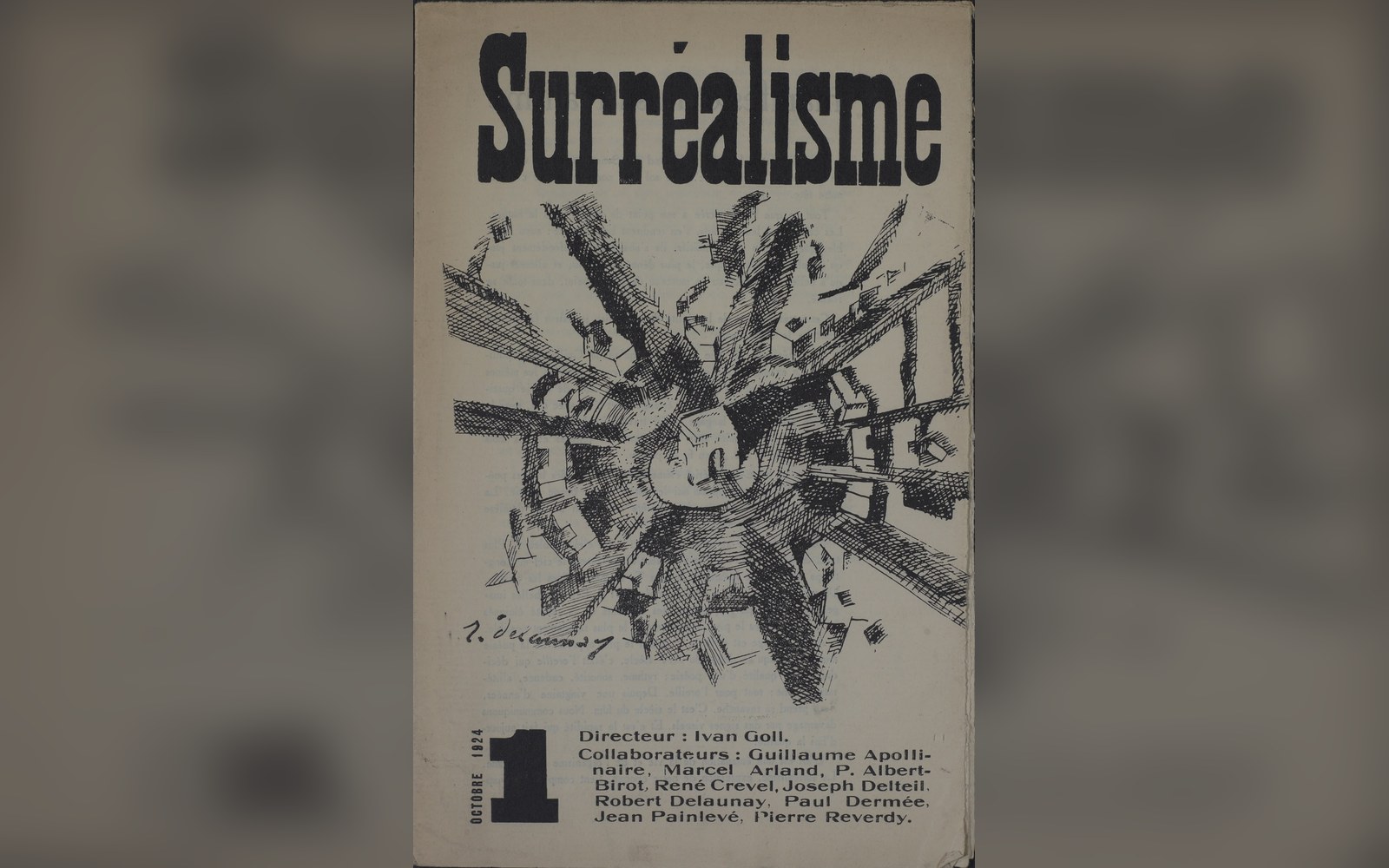
The Manifeste du surréalisme arrived in October 1924 as a definition, a challenge, and a list of enemies — all in one pamphlet.

The Document and Its Demands
André Breton published the Manifeste du surréalisme through the Éditions du Sagittaire in Paris in October 1924, the same month he launched the Bureau de Recherches Surréalistes on the rue de Grenelle. The text opened by dismissing the adult imagination as broken by habit and logic, borrowed the word "surréalisme" from Guillaume Apollinaire, who had coined it in 1917, and then proposed automatic writing — l'écriture automatique, composition without rational control — as the only honest method left to a writer. Realism, Breton declared, was hostile to any higher human aspiration, and the novel, with its tedious description and psychological machinery, was its worst instrument.
That last claim was the one that drew blood. Breton did not merely propose a new aesthetic; he retrospectively drafted writers into the movement, naming Swift, Sade, Nerval, Poe, Rimbaud, and others as surréalistes before the fact — a rhetorical move that made disagreement look like a failure of self-knowledge.

Expulsions and Schisms
The Manifesto's logic was exclusionary from the start, and within a few years the movement had generated as many expulsions as recruits. Philippe Soupault, who had co-written Les Champs magnétiques with Breton in 1919 — the founding experiment in automatic writing — was expelled in 1926. Antonin Artaud, whose furious engagement with surrealism was never quite on Breton's terms, was pushed out by 1927. Louis Aragon, a central figure in the movement, broke definitively in the early 1930s when the tension between surrealism and Communist Party discipline ↗ became irreconcilable.
Key dates
- October 1924Manifeste du surréalisme published by Éditions du Sagittaire
- 1919Breton and Soupault write Les Champs magnétiques, first automatic-writing experiment
- 1926Soupault expelled from the surrealist group
- 1927Artaud expelled
- 1929Second Manifeste du surréalisme published; Bataille's group issues Un Cadavre in response
- Early 1930sAragon and Éluard break with Breton over Communist Party allegiance
Breton issued a Second Manifeste du surréalisme in 1929, which read less like a programme than a settling of accounts: it named those expelled and explained why. A group of dissidents — including Georges Bataille — responded with Un Cadavre, a pamphlet whose title was pointed. The movement had declared everything else finished; its own factions were discovering that surrealism, too, could be ended by decree.