Also in Houses
Gallimard and the NRF: One Cover, One Hundred Years
Minuit Printed Underground
The paperback revolution arrived in France not with a manifesto but with a price tag — and it remade who could afford the French literary canon.
A New Object at an Old Price
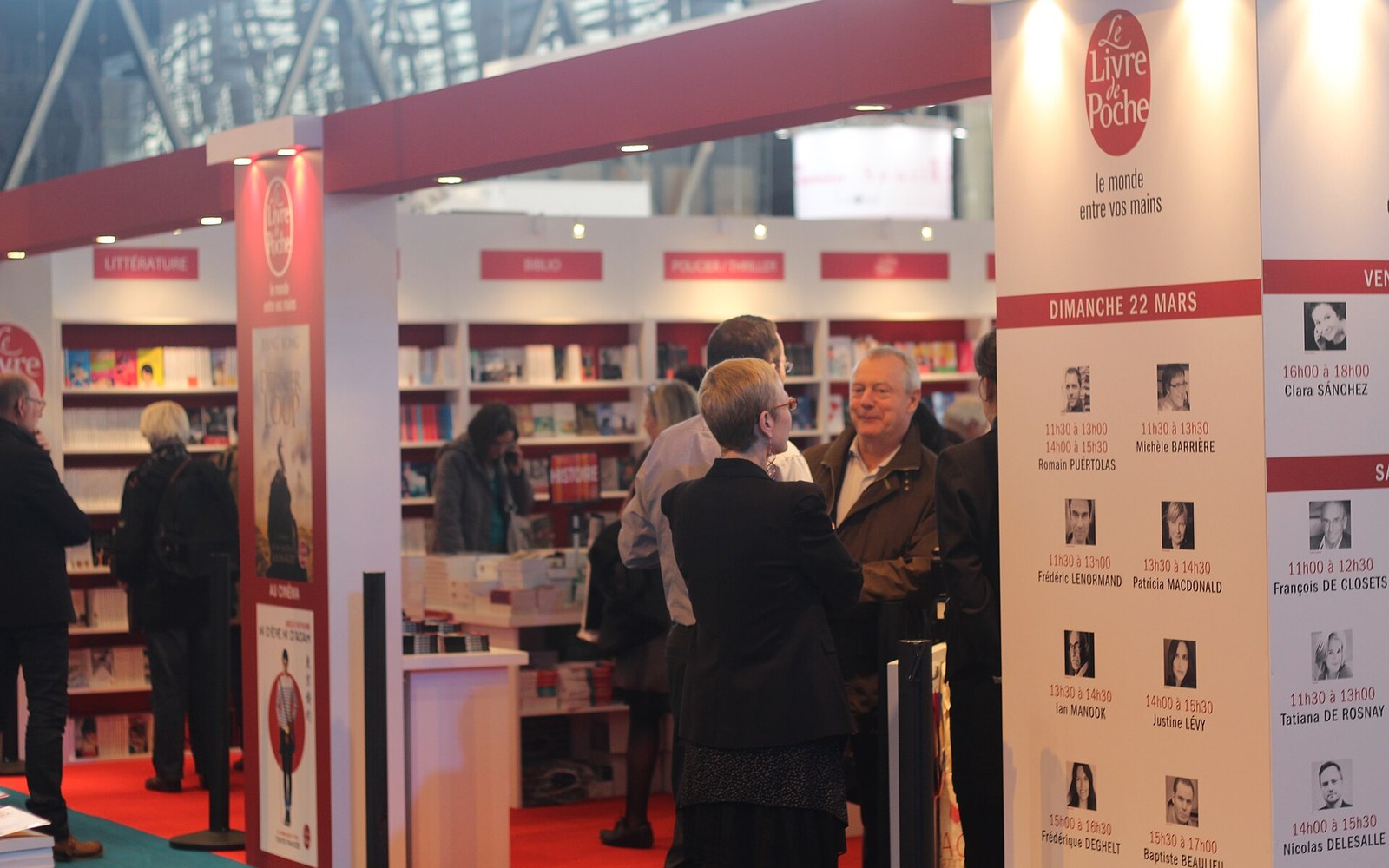
Hachette launched Le Livre de Poche in February 1953 with a low cover price, within reach of an ordinary household's weekly spending — making it the first mass-market paperback format in France to treat affordability as an editorial principle rather than an afterthought. The founding list of thirty titles drew from Gallimard and Calmann-Lévy catalogues under licensing agreements, a commercial structure that kept the NRF cover's prestige authors circulating in hardback while dispatching the same texts into kiosks, railway bookstalls, and tobacconists that had never previously sold novels.
Key numbers
Among the early titles was Henri Troyat's L'Araigne (The Spider), winner of the Prix Goncourt in 1938, followed rapidly by Honoré de Balzac, Victor Hugo, and André Gide. The list was canonical from the start: the selection signalled that Le Livre de Poche was not a cheap-fiction imprint but a democratised Pléiade — the same authors, the same texts, stripped of the leather binding and the thin bible paper, delivered to readers who had been priced out of the broché edition.

Distribution was the mechanism that made the price meaningful. Hachette already controlled the Messageries Hachette network, which reached newspaper kiosks and station bookstalls across France. A novel available at a train station in Lyon or Bordeaux, rather than only in a Paris librairie, represented something genuinely new in French publishing geography. First-year sales exceeded ten million copies across the initial titles — a figure without precedent in French trade publishing.

The format itself was borrowed partly from the British Penguin model, founded in 1935, and partly from American paperback houses, but adapted to French reading habits: the books retained prefaces by critics and scholars, preserving some of the editorial authority the NRF cover conferred on a hardback. This was not pulp. The design — a spare cover, a colour band keyed to genre — communicated seriousness at a newsstand.
Chronology
- 1935Penguin Books launches in Britain, the model Le Livre de Poche partially follows
- February 1953Hachette launches Le Livre de Poche
- 1970Éditions du Seuil launches Points imprint in response
- 1972Gallimard launches Folio imprint in response
Within two decades, Gallimard responded with its own Folio imprint (1972) and Éditions du Seuil with Points (1970), but Le Livre de Poche had already altered the baseline assumption: that a canonical French text should be broadly accessible in print ↗. By 1960, Balzac, Flaubert, and Zola were available in formats that a student or factory worker could afford without choosing between the book and the week's groceries.