Also in Writers
The Cork-Lined Room at 102 Boulevard Haussmann
Montaigne Locked Himself in a Tower and Invented a Form
The most radical act in French poetry was not a poem. It was silence.
The Record Closes Early
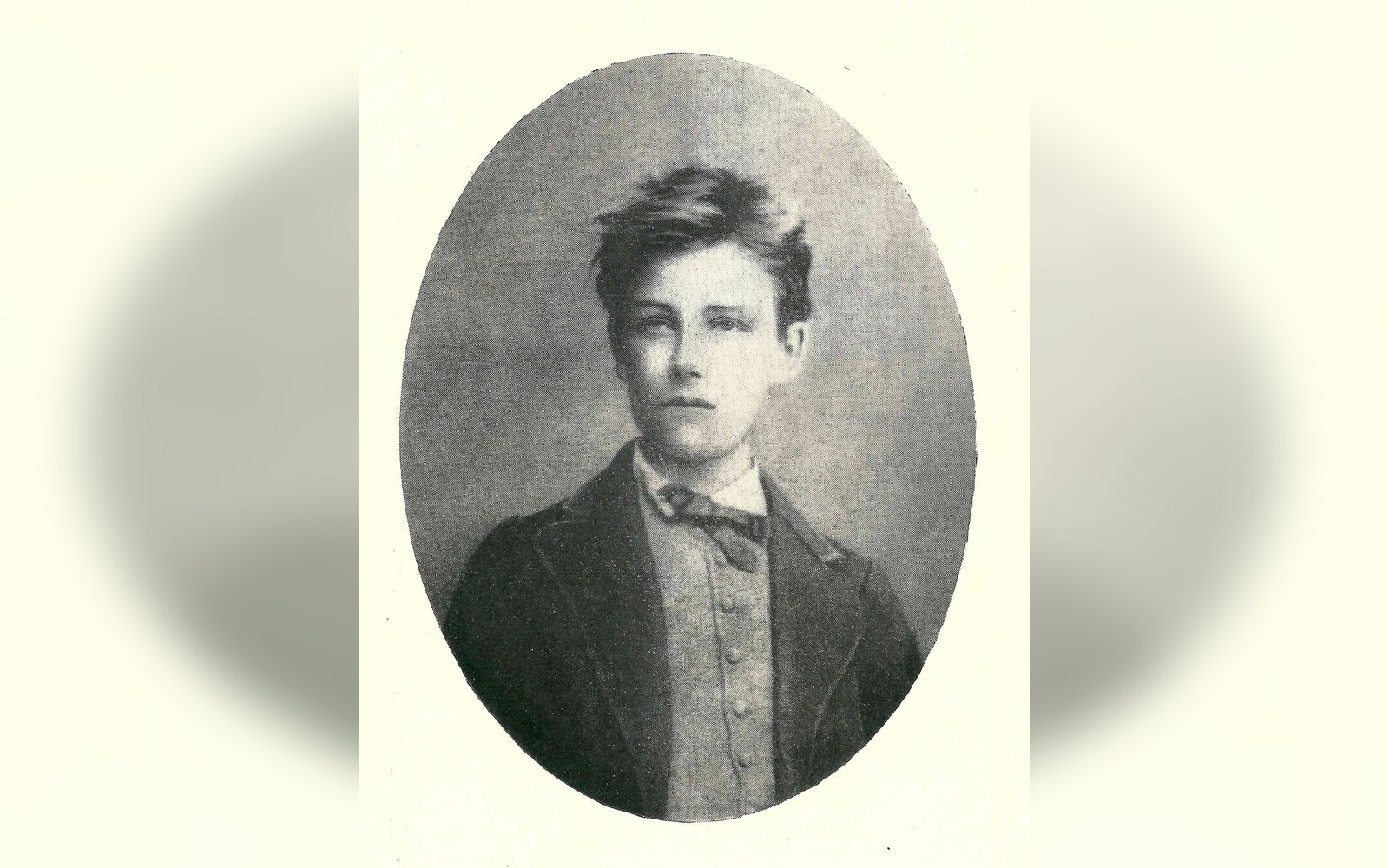
Arthur Rimbaud was born in Charleville in 1854 and had effectively finished writing by 1872 — the year he was writing the prose poems that would become Les Illuminations; Une Saison en enfer, a prose work, followed in 1873. He was sixteen when Paul Verlaine first read his work and summoned him to Paris; he was eighteen when their turbulent relationship brought both men to London and then Brussels. On 10 July 1873, in a Brussels hotel room, Verlaine shot Rimbaud in the wrist. The Belgian court sentenced Verlaine to two years in prison. The trial record in Brussels ↗ is the last document in which Rimbaud appears as a literary figure in any institutional sense. He was eighteen.

Une Saison en enfer was printed that autumn by a Brussels press, Alliance Typographique, at Rimbaud's own expense — a tirage à compte d'auteur that he appears never to have distributed. He left the bulk of the print run at the printer's and walked away. By 1875 he had handed the manuscripts of Les Illuminations to Verlaine and ceased writing entirely. He was twenty.
Harar and the Letters That Remain
What followed is documented not in poems but in commercial correspondence preserved at the Bibliothèque nationale de France ↗. Rimbaud spent the 1880s as a trader and occasional arms dealer in Harar, in what is now Ethiopia, writing letters to his family in Charleville that discuss coffee prices, caravan routes, and requests for scientific instruments — a theodolite, photography equipment. The letters contain no mention of his poetry, no contact with publishers, no apparent interest in the literary reputation accumulating around his name in Paris. When Verlaine began publishing the Illuminations in La Vogue in 1886, Rimbaud was in Harar and did not respond.
He returned to France in 1891, gravely ill with a tumour in his right knee. He died in Marseille on 10 November 1891, at thirty-seven. His sister Isabelle was present; she subsequently controlled much of what the archive became.
Chronology
- 1854Born in Charleville
- 1871Writes to Verlaine; arrives in Paris
- 1872Completes work that becomes Les Illuminations
- 1873Brussels shooting; Verlaine imprisoned; Une Saison en enfer printed at author's expense
- 1875Hands Illuminations manuscripts to Verlaine; ceases writing
- 1880sActive as trader in Harar, present-day Ethiopia
- 1886Verlaine publishes Les Illuminations in La Vogue; Rimbaud does not respond
- 1891Dies in Marseille, aged thirty-seven
The question of why he stopped has generated more commentary than any equivalent silence in French literary history. The letters from Harar answer it only in the negative: they record a man who had, by every material indication, decided the matter was closed.