Also in Prizes
The Renaudot Is Announced in the Same Building, an Hour Later
The Goncourt Lunch Has Happened Every November Since 1903
Members are known, with a studied grandeur that has attracted equal parts reverence and mockery, as les Immortels — the Immortals. The title is ironic only in retrospect: since 1635, around seven hundred individuals have held the forty chairs. Women were excluded by convention until 1980, when Marguerite Yourcenar became the first female member, taking chair 3. Assia Djebar followed in 2005 and Simone Veil in 2008. The composition of the current body includes novelists, poets, historians, scientists, jurists, and diplomats, reflecting the Académie's ambition to represent French culture rather than belles-lettres alone.
The great project, the Dictionnaire de l'Académie française, has been in continuous production since 1635. The ninth edition ↗ is currently being completed, available in searchable form online, each entry representing the Académie's considered position on a word's meaning and usage. The dictionary's slowness has always been part of its reputation — Voltaire famously contributed to an accelerated early effort — but slowness is also the point: the Académie is in the business of the long view.

Cardinal Richelieu founded the Académie française by royal letters patent in January 1635, bringing a small existing literary circle under royal authority and charging it with a single, enduring task: to produce a dictionary of the French language and, in doing so, to fix its grammar, rhetoric, and poetry. The founding statutes set the membership at exactly forty — a number chosen to be small enough to sustain genuine deliberation, large enough to outlast any faction. Those forty seats have never expanded. Each is identified by a number, not a name, and the number belongs to the chair, not to the person who fills it.

The chair of a deceased member remains formally vacant until an election is held. Candidates must formally solicit the votes of sitting members — a procedural humility that has, over the centuries, produced some of the more spectacular refusals in French literary life. Stendhal, Balzac, Flaubert, Zola, and Proust all died without ever receiving the distinction; Molière, dead in 1673, was still being denied admission symbolically enough that the Académie later honored him with a bust bearing the line "Rien ne manque à sa gloire, il manquait à la nôtre". Hugo occupied chair 14. Voltaire took chair 33 in 1746 after multiple failed attempts, reportedly telling no one he had been elected until the vote was confirmed. The chairs carry the weight of these histories like sediment.
Key facts about the chairs
Forty fauteuils and the procedure that fills them
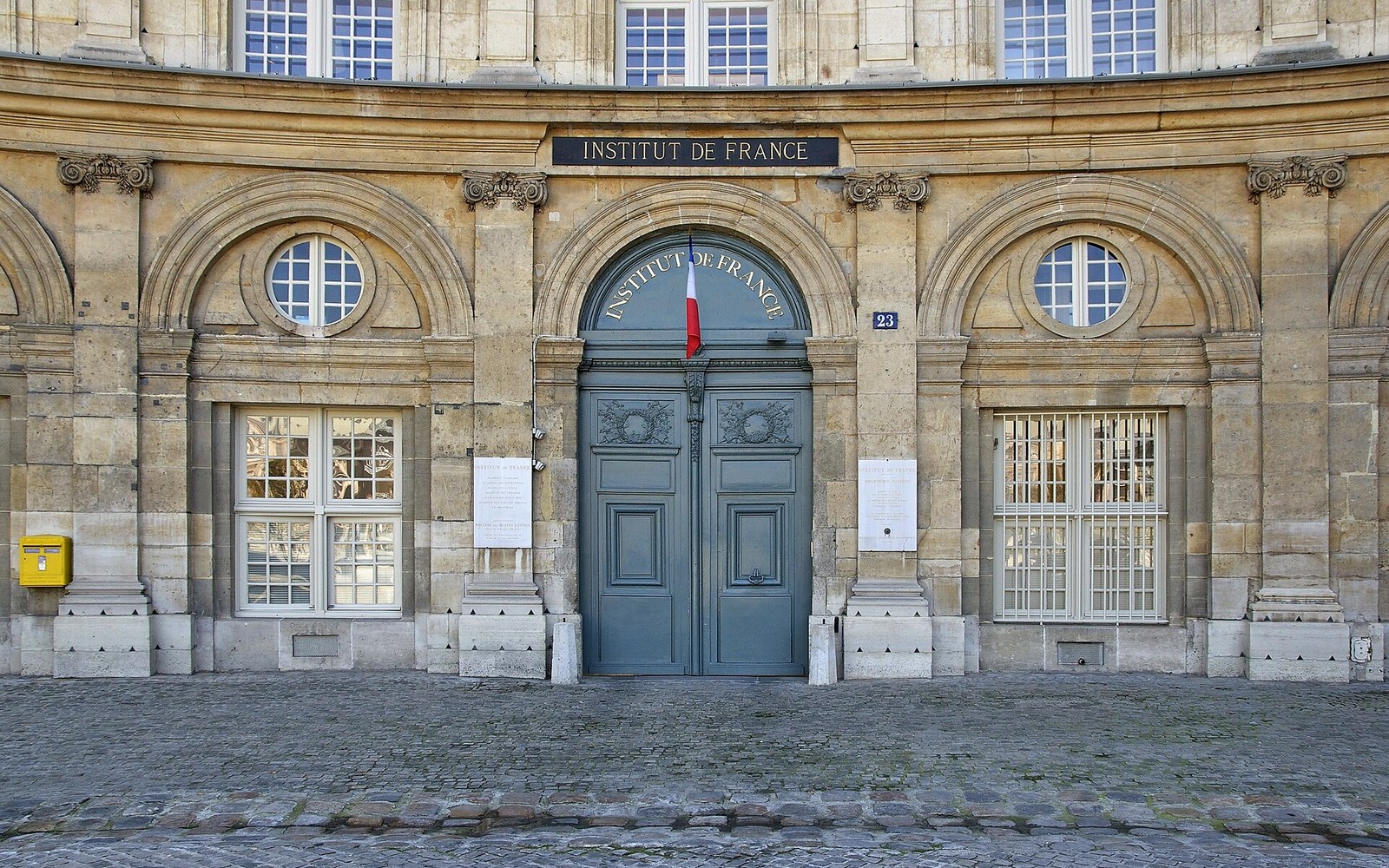
The election procedure is deliberately arcane. When a member dies, the Académie sets a date after which candidacies are formally received. Aspirants must call personally on each of the living members — a round of visits that persists into the present — before the assembled body votes by secret ballot. An absolute majority is required. If no candidate achieves it, further rounds follow. The result is confirmed by the head of state, since the Académie remains a body of the French Republic, administered under the Institut de France.
Chronology
- 1635Académie française founded by Cardinal Richelieu, letters patent in January
- 1694First edition of the Dictionnaire de l'Académie française published
- 1746Voltaire elected to chair 33 after multiple previous failures
- 1980Marguerite Yourcenar becomes first woman elected; women had been excluded by convention until that year
- 2024Ninth edition of the dictionary in progress, available online
The vacancy between a death and an election can last months or years, during which the numbered chair stands empty in the meeting room on the Quai de Conti. Some vacancies have run long enough to become conspicuous silences in French literary life. Others fill quickly, when a candidate of obvious standing presents themselves and the membership is uncontested in its judgment. The waiting, the visiting, the secret ballot, the confirmation from the Élysée: the procedure has changed remarkably little since Richelieu set it in motion, which is, of course, the whole idea.