Also in Rooms
What the BnF Keeps Under Glass
The Reading Room on the Place du Panthéon
Same name, different street, different founder — and no handover between them.
A Name With Two Owners
Sylvia Beach opened Shakespeare and Company at 8 rue Dupuytren in Paris in 1919 and moved it to 12 rue de l'Odéon in 1921, where it ran until the German Occupation forced its closure in 1941. The shop was bookshop, lending library, and postal address for the expatriate literary world — James Joyce received his correspondence there, and it was Beach who published the first edition of Ulysses ↗ in 1922, bearing the shop's own name as imprint. Beach never reopened after the war.
Chronology
- 1919Beach opens Shakespeare and Company at 8 rue Dupuytren
- 1921Shop moves to 12 rue de l'Odéon
- 1922Beach publishes Ulysses under the shop's imprint
- 1941Beach closes the shop under the Occupation; never reopens
- 1951Whitman opens Le Mistral at 37 rue de la Bûcherie
- 1962Sylvia Beach dies
- 1964Whitman renames his shop Shakespeare and Company
- 2011Whitman dies; his daughter Sylvia Whitman takes over
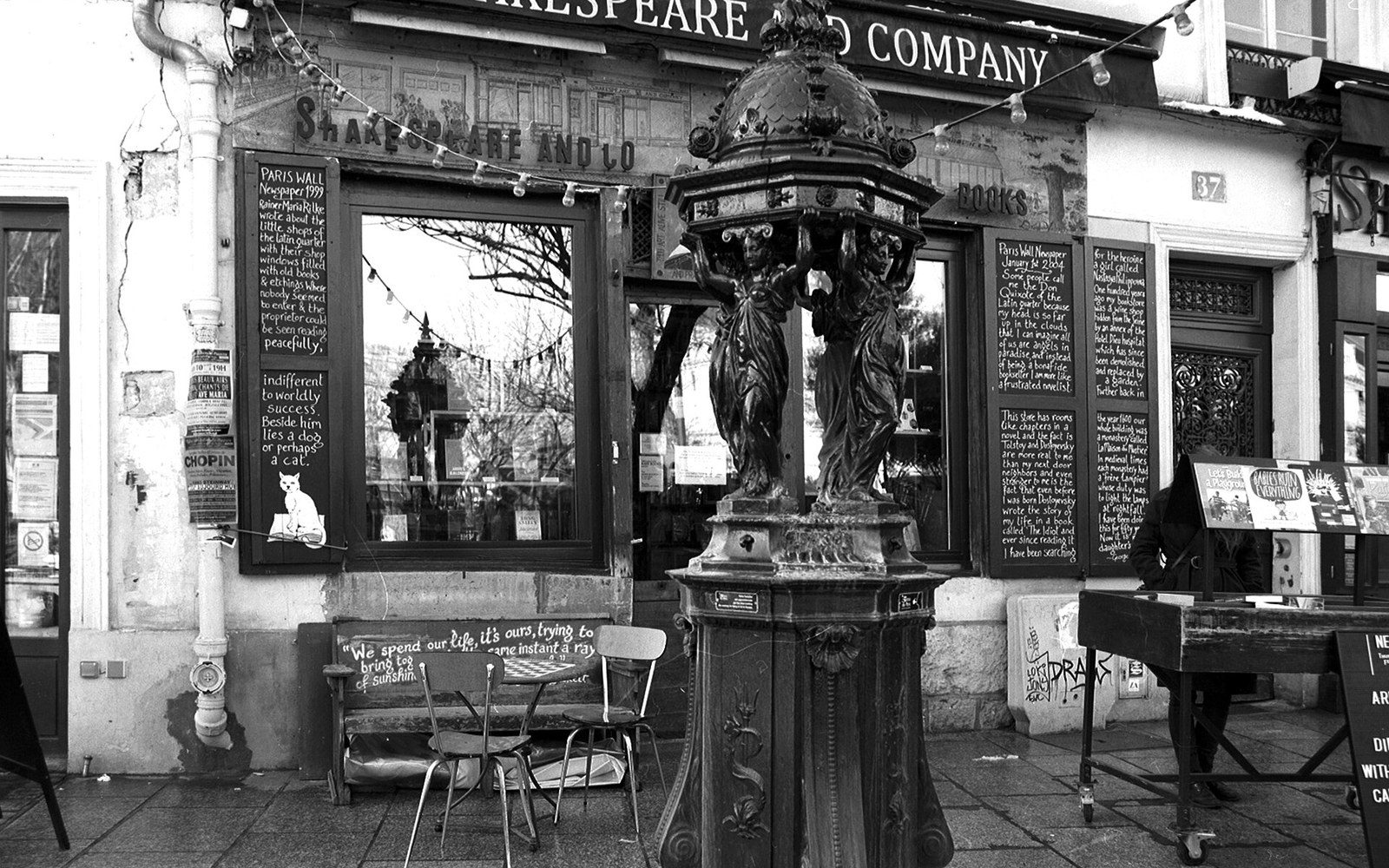
The shop at 37 rue de la Bûcherie, in another part of the Left Bank, is a different institution. George Whitman, an American who had arrived in Paris after the war, opened a bookshop there in 1951 under the name Le Mistral. He renamed it Shakespeare and Company in 1964, reportedly as a tribute to Beach following her death in 1962. Beach had not authorised the transfer of the name, and the two shops share no legal or commercial continuity — only a sentimental one.
What they shared in practice was a function: each served as an informal gathering point for Anglophone writers passing through or living in Paris. Whitman continued a version of Beach's lending-library ethos and housed itinerant writers — the so-called "tumbleweeds" — in the stacks overnight in exchange for work shifts. The shop's own account of its history ↗ acknowledges Whitman's act of renaming as homage rather than inheritance.
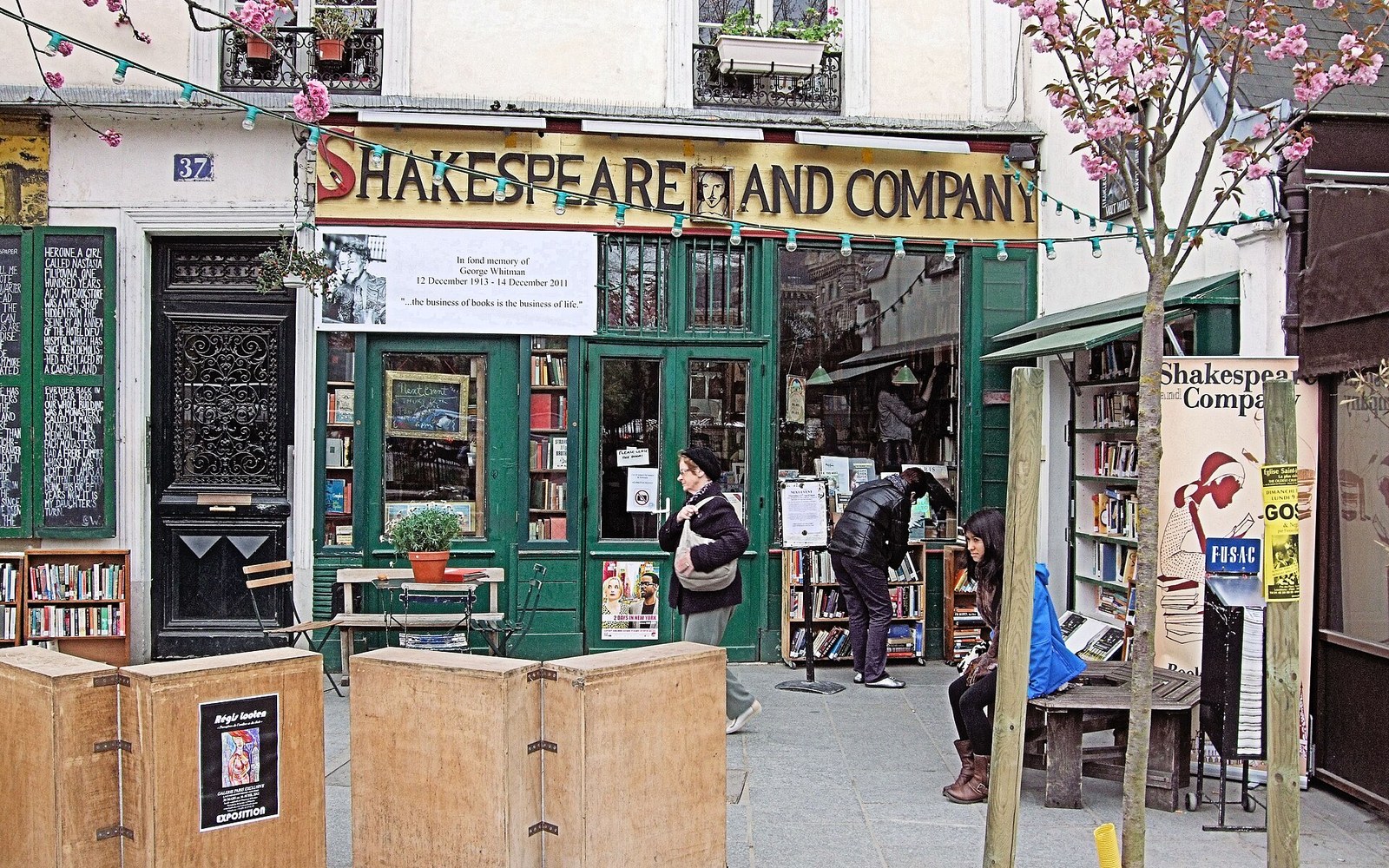
Beach's rue de l'Odéon address no longer operates as a bookshop; the street, in the sixth arrondissement near the Odéon theatre, retains the building. The rue de la Bûcherie shop, in the fifth arrondissement facing Notre-Dame, passed to Whitman's daughter Sylvia Whitman — named, her father said, after Beach — after his death in 2011.
Two addresses
Two addresses, three decades apart, one borrowed name: the confusion is understandable and, in the logic of Paris literary mythology, almost inevitable.